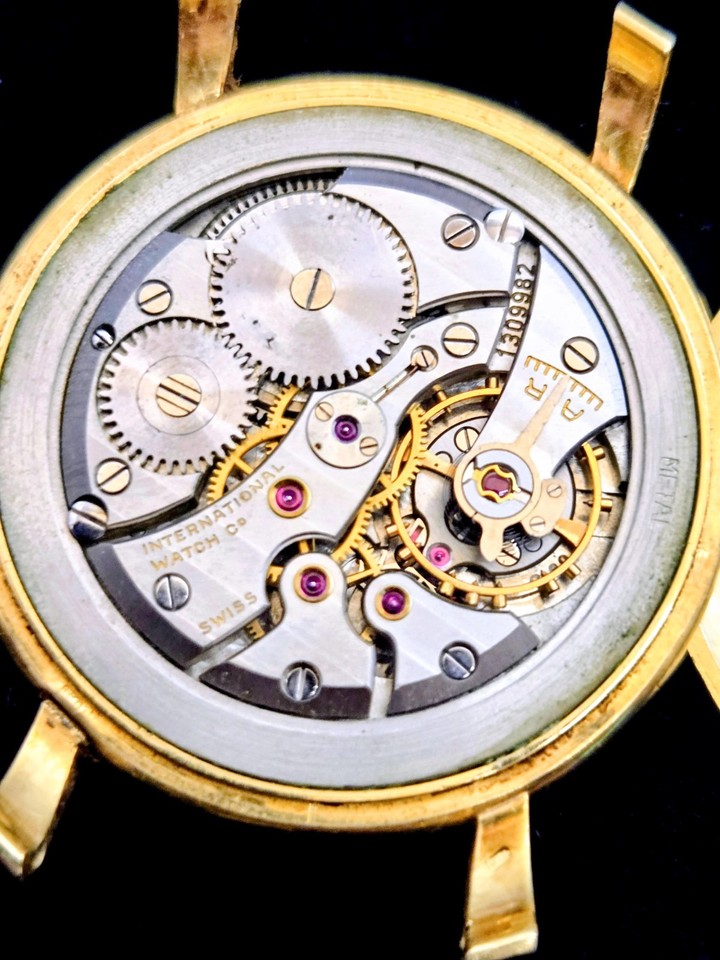
Cal. 89 dress
IWC's revered 1946 Pellaton dress and Mark XI movement
The IWC Caliber 89 is one of the most respected manual-wind movements of the mid-20th century. Designed by Albert Pellaton and introduced in 1946, it was a manually wound, centre-seconds calibre built on the architecture of IWC's earlier Calibre 83 workhorse. Compact and robust, it measured 27.1mm across with 17 jewels, ran at a leisurely 18,000 vph (2.5 Hz), carried an overcoil (Breguet) hairspring, and offered roughly 36 hours of power reserve.
Though best remembered for powering the Mark XI pilot's watch supplied to the British military from the late 1940s, the Caliber 89 spent most of its long life (production ran into the late 1970s) inside elegant IWC dress watches in steel and precious metals. Its reputation for accuracy and reliability made it a benchmark, and it provided the technical basis for later IWC movements such as the Calibre 5000 and the 89000 family.
- The Caliber 89 was designed by Albert Pellaton and introduced in 1946, remaining in production until around 1979. ↗ chronopedia.club
- It is a manual-wind, centre-seconds movement: 27.1mm diameter, 17 jewels, 18,000 vph (2.5 Hz), overcoil hairspring, about 36 hours of power reserve. ↗ chronopedia.club
- Pellaton built the Caliber 89 on the architecture of IWC's earlier Calibre 83, its workhorse since the early 1930s. ↗ quillandpad.com
- The movement powered the Mark XI pilot's watch (ordered by the British Ministry of Defence, around 1948) as well as many steel and gold IWC dress watches. ↗ quillandpad.com
- The Caliber 89 served as the basis for later IWC movements, including the Calibre 5000 and the 89000 family. ↗ chronopedia.club